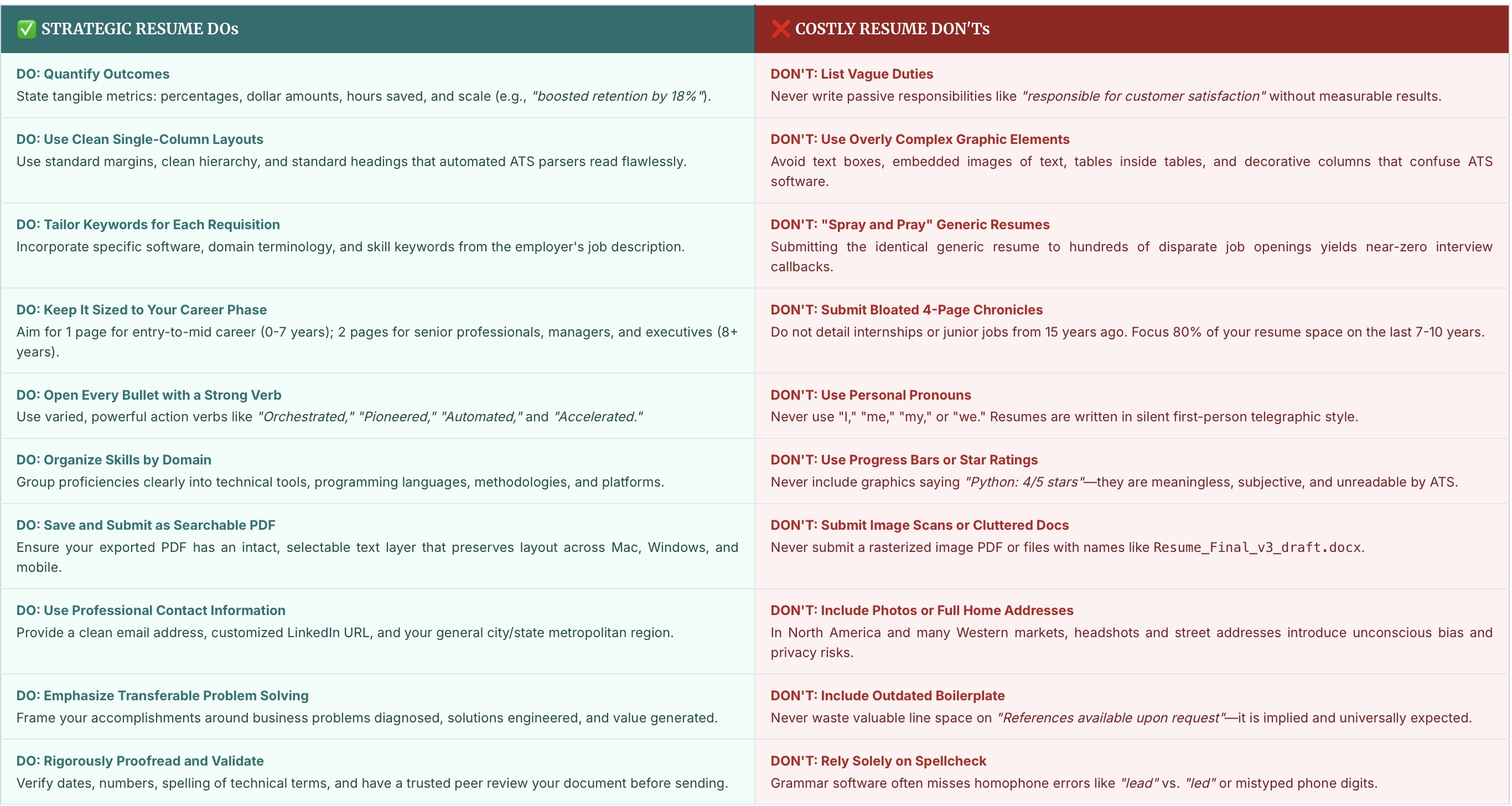

1. Introduction: The Power of First Impressions
In the modern professional ecosystem, your resume is far more than a summary of past employment - it is your personal branding document, your career thesis, and your very first impression. Before a hiring manager ever hears the cadence of your voice, witnesses your enthusiasm in an interview, or evaluates your cultural fit, they form a subconscious, near-instantaneous judgment based solely on the piece of paper (or PDF screen) resting before them.Eye-tracking research conducted by talent acquisition researchers reveals that recruiters spend an average of just 6 to 7.4 seconds conducting an initial scan of a candidate's resume. During this fleeting window, the human eye follows a predictable pattern—scanning the candidate's current title, current company, tenure dates, previous title, and educational credentials. If the information is dense, disorganized, or generic, the document is swiftly relegated to the rejection pile. Conversely, a masterfully structured resume creates an immediate feeling of clarity and competence. It answers the recruiter's silent, urgent question: "Can this individual solve the specific problems our team is facing right now?"
The stakes could not be higher. In an era where a single desirable corporate job posting receives between 250 and 1,500 applications, your resume functions as a binary gatekeeper. It either opens the door to high-compensation executive discussions, career pivots, and fulfilling leadership roles, or it quietly slams the door shut before you ever get a chance to speak. Understanding how to engineer the "right" resume is not merely a formatting exercise - it is the highest-leverage career investment you will ever make.
2. What Makes a Resume "Right"? Core Principles
Job seekers frequently ask whether a resume should be one page or two, whether it should include color, or what typeface commands the most authority. While typography and page boundaries matter, they are secondary to the core strategic principles that separate world-class resumes from mediocre ones. A resume is truly "right" when it embodies four foundational pillars:
1. Structural Clarity & Scannability
The human eye craves hierarchy. A winning resume uses generous margins, consistent indentation, bold emphasis on metrics, and logical section dividers. If a recruiter cannot pinpoint your primary technical proficiencies and career trajectory in five seconds, your structure has failed.
2. Ruthless Relevance (Signal over Noise)
Do not include every duty you have performed since university. Curate your content like a museum curator. Every bullet point must earn its place on the page by demonstrating how your past directly prepares you to deliver value in the target role.Type your paragraph here
3. Strategic Tailoring
The era of sending the identical generic resume to fifty companies is over. The "right" resume mirrors the exact language, challenges, and core competencies explicitly highlighted in the target job requisition, weaving relevant keywords organically into achievement bullets.
4. Uncompromising Honesty
Distinguish between strategic framing and misrepresentation. Highlighting your leadership on a collaborative initiative is smart marketing; taking sole credit for an enterprise migration you observed is fraud that will be exposed in reference checks and technical vetting. Notice what is missing from these principles: flashiness, visual gimmicks, and graphic progress bars. The "right" resume does not attempt to disguise a lack of substance with decorative design elements; rather, it allows substantial, quantifiable achievements to shine through crisp, elegant typography.
3. The Anatomy of a Perfect Resume (Section by Section)
Every effective resume follows a recognized architectural framework. Below is the anatomy of a contemporary, high-converting resume, along with tactical guidance on how to write each component.
A. Contact Information: The Modern Protocol
Your contact block should be clean, compact, and positioned prominently at the top of page one. Modern recruitment standards require significant discipline regarding what to include - and what to omit:
B. Professional Summary vs. Objective: Why Objectives Are Dead
For decades, candidates opened their resumes with an "Objective Statement" such as: "Seeking a challenging position in marketing where I can expand my skills." In modern hiring, this statement is considered counterproductive because it focuses entirely on what the candidate wants from the employer, rather than what the candidate can deliver.Replace the objective with a punchy Professional Summary (also called an Executive Value Proposition). In three to four sentences, your summary should combine four critical ingredients:
C. Work Experience: The Google "XYZ" Formula
The experience section is the core engine of your resume. The most common mistake candidates make is treating this section as a passive laundry list of job responsibilities copied directly from a HR job description (e.g., "Responsible for managing client social media accounts"). To transform duties into compelling impact statements, apply the legendary formula popularized by Google's People Operations leadership:
Notice the stark contrast. The transformed bullet point establishes the scope of work, quantifies the bottom-line financial impact, and clearly illuminates the candidate's strategic problem-solving methodology.
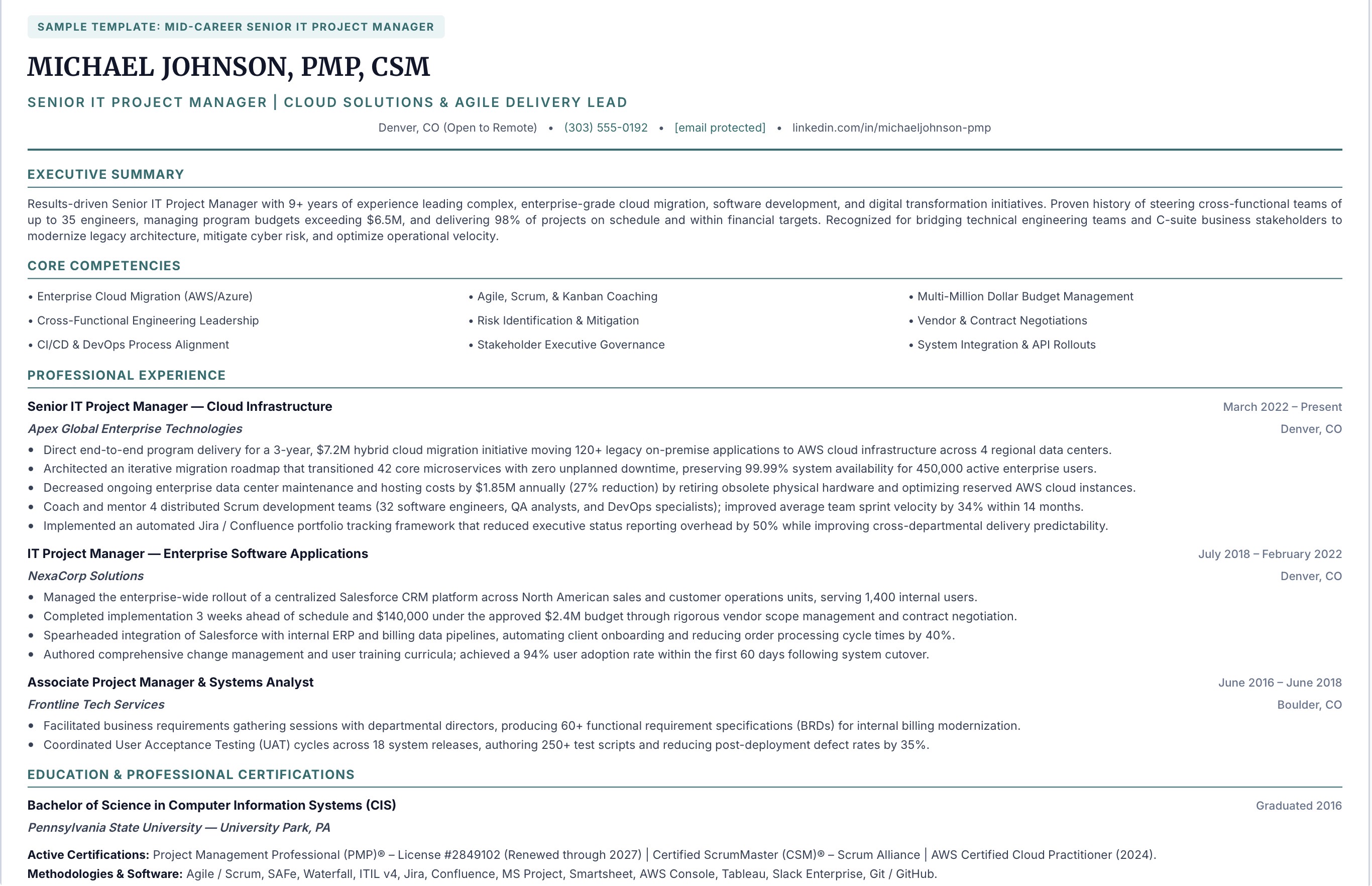
Sample Resume #1: Mid-Career Professional
4. Power Language: High-Impact Action Verbs Directory
Every single bullet point in your experience section should begin with a strong, active, past-tense action verb (or present tense for current active roles). Avoid passive filler phrases like "Assisted with," "Helped to," "Worked on," or "Tasked with." Use the categorized directory below to inject vigor into your achievements:

D. Education: Strategic Placement & Modern Rules
Your education section should reflect your current career phase. If you are a recent graduate (within 1–2 years of graduation), your education is one of your primary assets and belongs near the top of the resume, immediately following your summary. Once you have accumulated more than two years of full-time professional experience, your education should move below your work history.
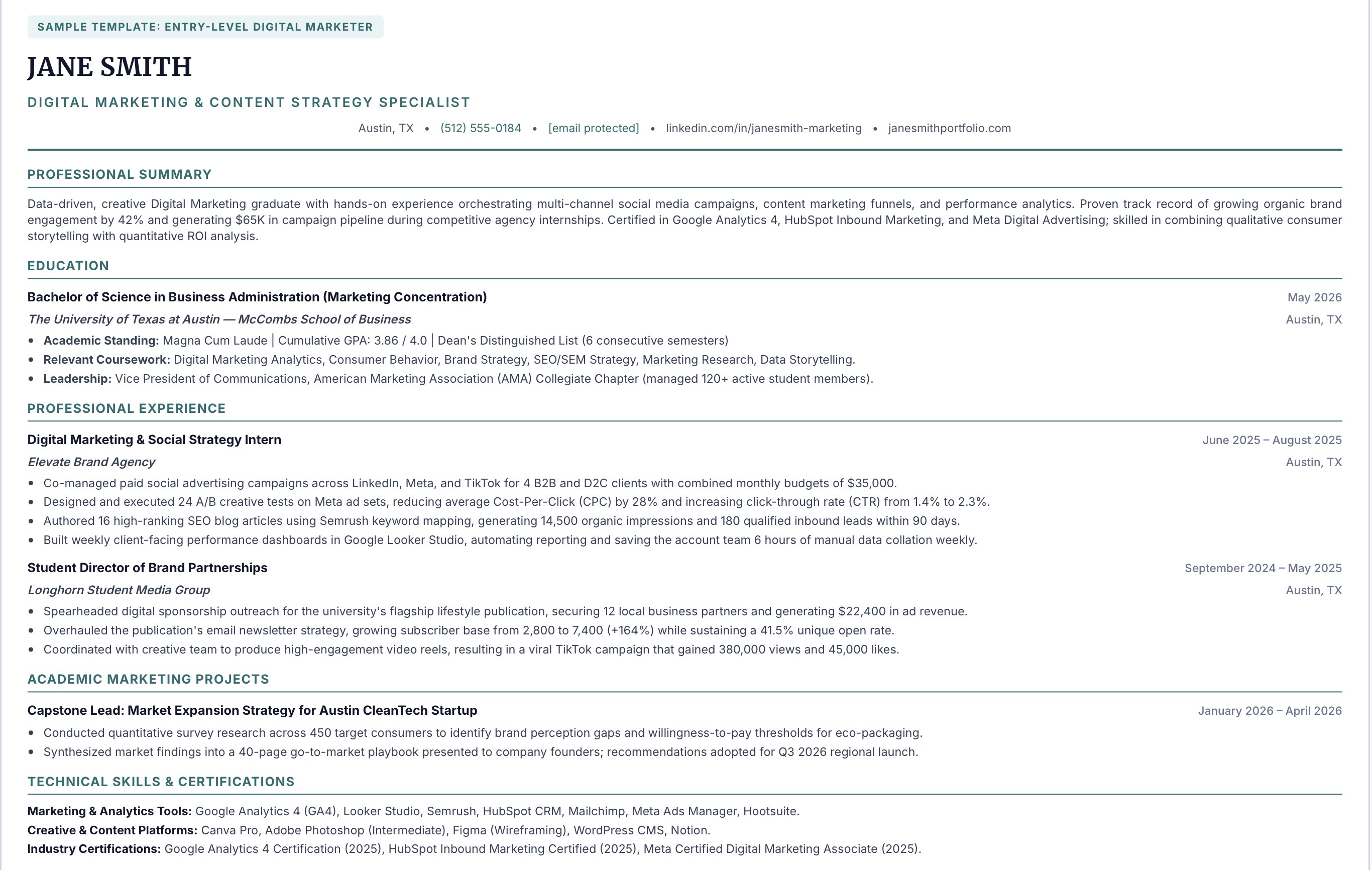
Sample Resume #2: Entry-Level / Recent Graduate
E. Skills: Categorized Competencies
Never dump a monolithic comma-separated list of 35 random skills at the bottom of the page. Modern recruiters and ATS systems parse skills far more effectively when they are grouped into clean, functional categories:
F. Optional High-Value Sections
Depending on your career trajectory, strategic optional sections can give you a decisive edge:
5. Resume Dos & Don'ts: The Definitive Comparison